
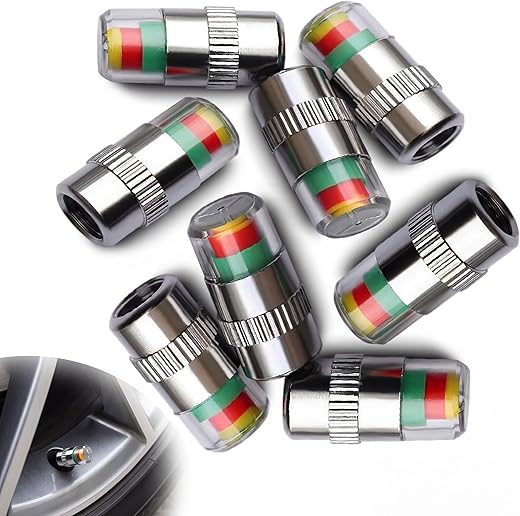
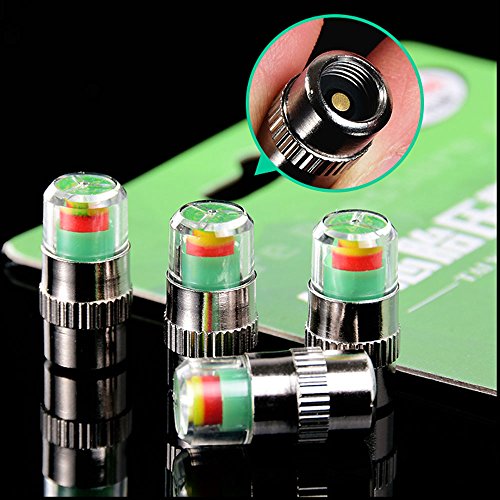
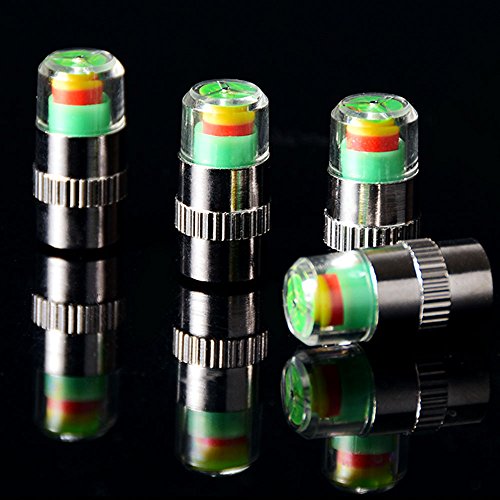
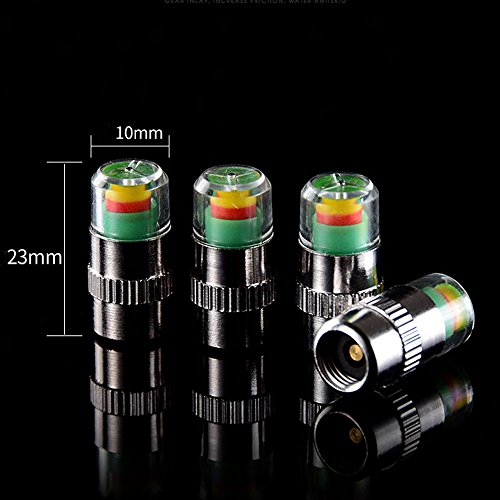
Tire Pressure Monitor Valve Stem Caps — 3-Color Eye Alert, 8 Pcs (2.2 Bar / 32 PSI)
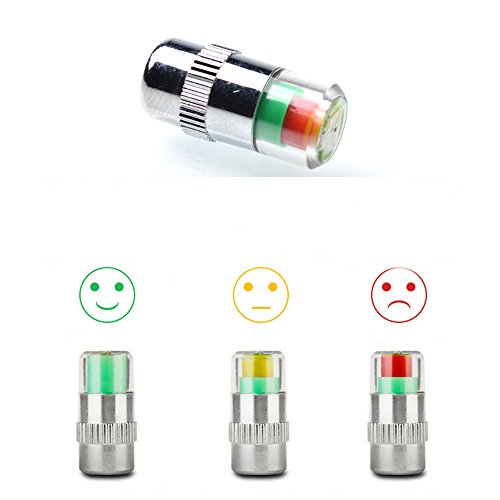
The ANKIA Tire Pressure Monitor Valve Caps are the best cheap, effortless way to keep an eye on tire pressure — a 3-color eye reads green when normal, yellow when down ~5 psi, and red when down ~10+ psi, so you can check at a glance with no batteries or tools. This 8-pack is rated for 32 PSI and fits standard valves on cars, bikes, and motorcycles. Important: they’re an approximate indicator, not a precision gauge or TPMS replacement — match the PSI rating to your vehicle and verify with a real gauge.


 eBay
| Price history for 8Pcs 2.2Bar 32-to-35 PSI Car Tire Pressure Monitor Valve Stem Caps Sensor Indicator Easy to Read 3 Color Eye Alert | |
|---|---|
|
Latest updates:
|
|

$10.99
Description
ANKIA Tire Pressure Caps Review (2026) — Do the 3-Color Indicator Caps Actually Work?
This ANKIA Tire Pressure Caps review covers the cheap little upgrade that turns checking your tires from a “get out the gauge and crouch by each wheel” chore into a quick glance as you walk to the car. The ANKIA Tire Pressure Monitor Valve Stem Caps replace your ordinary valve caps with a 3-color eye that reads green when pressure is fine, yellow when it’s down about 5 psi, and red when it’s down by at least 10 psi. There are no batteries and no tools — you just screw them on. This 8-pack is rated for 32 PSI (2.2 Bar), covers a full set plus spares, and gives you an early warning of a slow leak before it becomes a flat. For anyone who never remembers to check their tires, the ANKIA Tire Pressure Caps are a tiny everyday gadget that nudges you to.
The ANKIA Tire Pressure Caps are what you reach for — or rather, glance at — when you want a constant, passive reminder of tire health without thinking about it. Walk up to the car, see four green dots, and drive off; see a yellow or red one, and you know to add air before it costs you a tire or a tow. To be clear up front: these are a convenient visual indicator, not a precision instrument, so they work best alongside a proper gauge rather than instead of one. For other everyday-carry essentials like light and fire, the arc lighter combo has you covered (review). But for the everyday job of keeping half an eye on your tire pressure with zero effort, the ANKIA Tire Pressure Caps are the simple, set-and-forget pick.
ANKIA Tire Pressure Caps — Key Specs at a Glance
| Spec | Detail |
|---|---|
| Type | Passive tire-pressure indicator valve stem caps |
| Pack | 8 pieces (full set + spares, or two vehicles) |
| Rating (this listing) | 2.2 Bar / 32 PSI |
| Indicator | 3-color eye — Green / Yellow / Red |
| Green | Tire pressure normal |
| Yellow | Pressure down ~5 psi |
| Red | Pressure down by at least ~10 psi |
| Power | None — fully passive, no batteries |
| Install | Inflate to correct pressure, screw cap on tight |
| Material | Chromed metal + PC |
| Fit | Standard Schrader valves (cars, trucks, bikes, motorcycles) |
| Other ratings | Also sold in 30 PSI and 36 PSI versions |
What Makes the ANKIA Tire Pressure Caps a Useful Everyday Pick?
The ANKIA Tire Pressure Caps earn their place because they solve a behavior problem, not just a hardware one. Almost everyone knows they should check tire pressure regularly, and almost no one actually does until a warning light appears or a tire goes flat. By putting a color-coded indicator right on the valve, these caps make the check passive — you see the status every time you walk past the wheel, so a developing problem catches your eye long before it becomes an emergency. That nudge is the real value.
The simplicity is a big part of the appeal. There are no batteries to replace, no sensors to pair, and no app — you set your tires to the correct pressure, screw the caps on tight, and from then on the color does the work. A green window means you’re good; yellow means you’re down roughly 5 psi; red means at least 10 psi low and you should add air promptly. It’s about as low-friction as a monitoring tool gets.
The safety and savings case is straightforward, because tire pressure genuinely matters. Underinflated tires wear out faster, handle worse, and are more prone to blowouts — which is why agencies like the NHTSA emphasize keeping tires properly inflated. Catching a slow leak early with a quick glance can prevent the kind of underinflation that ruins a tire or causes a roadside failure.
There’s a fuel-economy angle too. Properly inflated tires roll more efficiently, and the U.S. Department of Energy’s FuelEconomy.gov notes that keeping tires inflated to the recommended level improves gas mileage. A cheap set of caps that prompts you to top off a soft tire can quietly pay for itself in fuel and tire life over time.
Finally, the value and coverage are excellent. You get eight caps for a few dollars — enough for a full set of four with spares, or to outfit two vehicles, or to cover bikes and motorcycles that use the same standard valves. The chromed metal finish looks tidier than a plain plastic dust cap, and it still does the basic job of protecting and sealing the valve. As an inexpensive, effortless awareness tool, it’s hard to argue with.
ANKIA Tire Pressure Caps Review — Real-World Use
The ANKIA Tire Pressure Caps review earns its spot on my everyday-gadgets list because the benefit shows up passively, every time you approach your vehicle.
First, the daily glance. The intended use is simply to look. As you walk up to the car, a quick scan of four green windows tells you everything’s fine; a yellow or red one tells you to grab the air pump. For people who’d otherwise never think about tire pressure between oil changes, that habit-free awareness is genuinely useful.
Second, catching slow leaks. Tires lose pressure gradually — a nail, a slightly leaky valve, or just cold weather — and the danger is that you don’t notice until it’s badly low. The color shift gives you a heads-up while the loss is still minor, so you can top off or get a slow puncture looked at before it strands you.
Third, multi-vehicle and multi-use coverage. With eight caps, you can cover a car and keep spares, fit two cars, or put them on motorcycles, trailers, and bikes that share the same standard valve. For a household with several sets of wheels to keep an eye on, the pack stretches a long way.
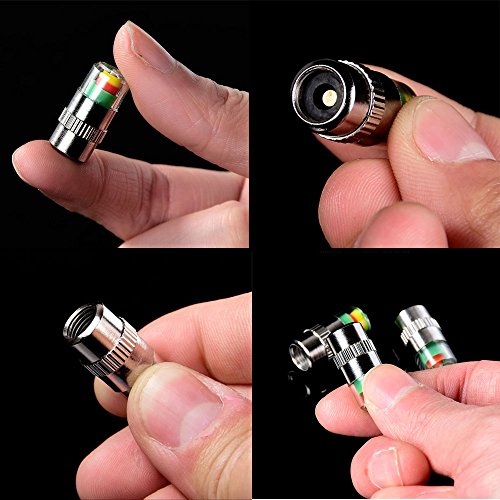
Fourth, low effort to live with. Once installed, there’s nothing to maintain — no charging, no calibration. The main thing to remember is the practical stuff: keep track of the tiny washer if you ever remove a cap, and take the indicator caps off before an automatic car wash or before a garage services your tires, then refit them afterward. Beyond that, they just sit there doing their quiet job.
ANKIA Tire Pressure Caps — Honest Trade-Offs
The ANKIA Tire Pressure Caps are a handy convenience, but it’s important to be honest about what they are and aren’t. First and most important: they are an approximate visual indicator, not a precision gauge or a true TPMS. They show roughly whether a tire is low, not an exact PSI, and they should complement — never replace — checking with a real tire gauge and paying attention to your vehicle’s built-in pressure monitoring. Treat the colors as a prompt to verify, not as a final reading.
Second, they’re PSI-specific. This set is calibrated for 32 PSI, so you must buy the rating that matches your vehicle’s recommended pressure (found on the driver’s-door placard, not the number on the tire sidewall). The wrong rating will read incorrectly. ANKIA sells 30 PSI and 36 PSI versions for that reason — picking the right one is on the buyer.
Third, temperature affects readings. Tire pressure naturally drops in cold weather and rises when hot, so an indicator may flicker to yellow on a cold morning and back to green once you’ve driven a while — normal physics, but worth understanding so you don’t chase phantom problems. Fourth, the small black washer inside can fall out and is easy to lose when you unscrew a cap, so handle them carefully. Fifth, you should remove them before automatic car washes and before tire service at a garage, then refit them — a minor hassle. None of these make them useless; they simply mean these caps are a low-cost awareness aid, best used with a proper gauge, not a substitute for one.
ANKIA Tire Pressure Caps vs Other Monitoring Options — Which Is Right for You?
| Use case | Best type | This pick? |
|---|---|---|
| Effortless at-a-glance awareness, cheap | 3-color indicator caps | ✅ ANKIA (this review) |
| Exact PSI readings | Digital tire pressure gauge | — |
| Real-time numeric monitoring | Bluetooth/sensor TPMS kit | — |
| Just protecting the valve | Plain dust caps | Cheaper, but no indication at all |
The ANKIA Tire Pressure Caps win as a cheap, effortless awareness tool that nudges you to check your tires. If you want exact numbers or real-time data, a gauge or a sensor-based TPMS is the right tool — but as a passive everyday reminder that pairs with those, the ANKIA caps are the simple answer.
Who Should Buy the ANKIA Tire Pressure Caps?
- Drivers who never remember to check their tire pressure
- Anyone who wants an at-a-glance, no-effort awareness aid
- People prone to slow leaks they catch too late
- Multi-vehicle households (8 caps cover a lot of wheels)
- Motorcycle, trailer, and bike owners with standard valves
- Budget buyers wanting a cheap safety-minded upgrade
- New drivers building good tire-maintenance habits
- Anyone wanting a tidier look than plain plastic dust caps
- Gift buyers after a practical stocking stuffer for a driver
- People who already own a gauge and want a passive complement
Skip the ANKIA caps if you need exact PSI readings (get a proper gauge), or if you want real-time numeric monitoring inside the car (an aftermarket sensor TPMS is better). And remember to match the PSI rating to your vehicle.
ANKIA Tire Pressure Caps Alternatives to Consider
If the ANKIA indicator caps aren’t quite right, here are the alternative directions:
- Digital tire gauge: For exact PSI readings whenever you check.
- Aftermarket TPMS: A sensor-and-display kit for real-time numeric monitoring.
- Different PSI rating: The same caps in 30 PSI or 36 PSI to match your vehicle’s recommended pressure.
ANKIA Tire Pressure Caps Review — Frequently Asked Questions
How do the ANKIA Tire Pressure Caps work?
You inflate your tires to the correct pressure, then screw these caps on. A color window then shows green when pressure is normal, yellow when it’s down about 5 psi, and red when it’s down by at least 10 psi — so you can check at a glance.
Are they accurate enough to replace a gauge?
No. They’re an approximate visual indicator, not a precision gauge or a true TPMS. Use them as a prompt to check, and verify the actual pressure with a real gauge.
Which PSI rating should I buy?
Match your vehicle’s recommended pressure, shown on the driver’s-door placard (not the max pressure on the tire sidewall). This listing is 32 PSI; ANKIA also sells 30 PSI and 36 PSI versions.
Do they need batteries?
No — they’re fully passive. There’s nothing to charge or pair.
Why does the color change in cold weather?
Tire pressure naturally drops when it’s cold and rises when hot, so an indicator may read yellow on a cold morning and return to green after driving. That’s normal.
Will they fit my vehicle?
They fit standard Schrader valves used on most cars, trucks, motorcycles, and bikes.
Anything I should watch out for?
Don’t lose the small black washer when removing a cap, and take the caps off before automatic car washes and before tire service at a garage, then refit them.
How many come in the pack?
Eight — enough for a full set of four plus spares, or to cover two vehicles.
ANKIA Tire Pressure Caps Review — Final Verdict
The ANKIA Tire Pressure Monitor Valve Caps are the best cheap, effortless way to keep half an eye on your tire pressure, earning a spot on my “use it all the time” list because they make a check you’d otherwise skip completely passive. A 3-color eye that flags low pressure at a glance, no batteries, a simple screw-on install, eight caps for a few dollars, and a real chance to catch a slow leak before it costs you a tire — for the price, that’s a smart little upgrade.
The ANKIA Tire Pressure Caps’ trade-offs are honest and important: they’re an approximate indicator, not a precision gauge or a TPMS replacement; they’re PSI-specific so you must buy the right rating; and they react to temperature. But used the right way — as a passive everyday reminder alongside a proper gauge — they deliver genuine convenience and a nudge toward safer, more economical driving for very little money.
SoftPickr Rating: 7.8/10
Additional information
Specification: Tire Pressure Monitor Valve Stem Caps — 3-Color Eye Alert, 8 Pcs (2.2 Bar / 32 PSI)
|
Price History
| Price history for 8Pcs 2.2Bar 32-to-35 PSI Car Tire Pressure Monitor Valve Stem Caps Sensor Indicator Easy to Read 3 Color Eye Alert | |
|---|---|
|
Latest updates:
|
|
Reviews (0)
User Reviews
Be the first to review “Tire Pressure Monitor Valve Stem Caps — 3-Color Eye Alert, 8 Pcs (2.2 Bar / 32 PSI)”
Related Products

There are no reviews yet.