
Gaggia Classic Pro Espresso Machine — Best Enthusiast Espresso Machine Under $500
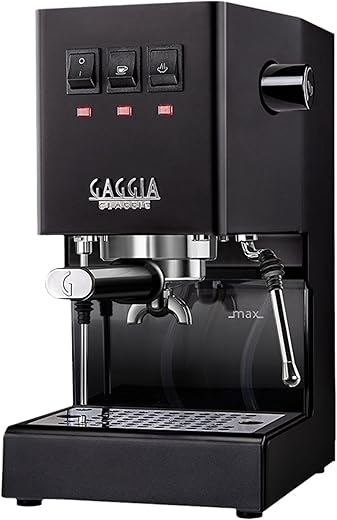
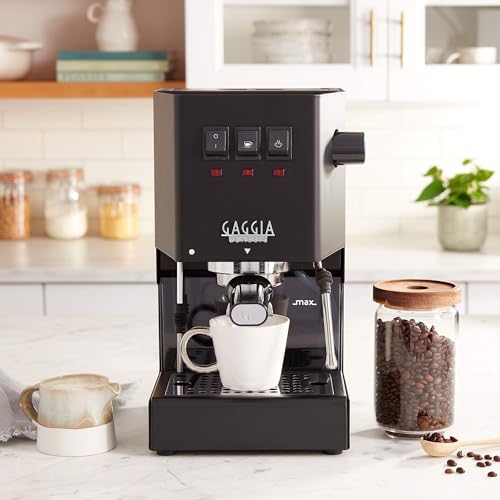
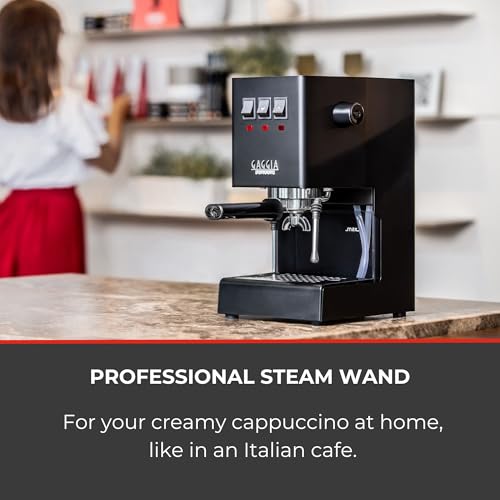
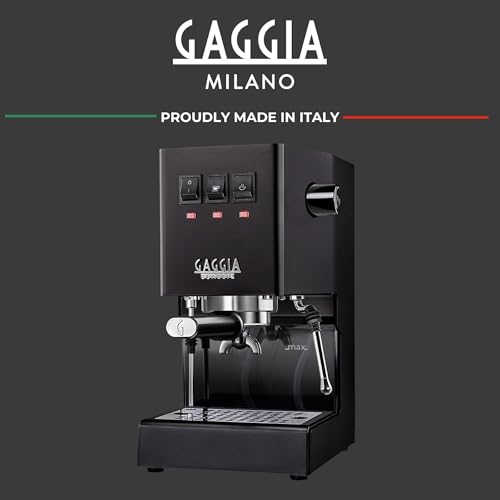
The Gaggia Classic Pro RI9380 is the best espresso machine under $500 for enthusiasts. Features made-in-Italy commercial-grade construction with new lead-free brass boiler for superior thermal stability, true 9-bar OPV extraction meeting Specialty Coffee Association standards, 58mm commercial stainless steel portafilter (professional industry standard), brass group head with stainless cover, professional two-hole commercial steam wand for latte-art-ready microfoam, single-piece 17-gauge stainless steel body, 3-way solenoid valve for dry coffee pucks, 2.1-liter (71 oz) water tank, built-in passive cup warmer, precision rocker switches, 3 filter baskets included (7g single, 14g double commercial, 14g pressurized for E.S.E. pods or pre-ground), and the largest aftermarket modification ecosystem of any home espresso machine. Backed by Gaggia’s Italian heritage dating to 1938 and a 2-year manufacturer warranty. Built to last 15-20 years.
$499.00
Description
Gaggia Classic Pro Review — Best Espresso Machine Under $500 for Enthusiasts?
This Gaggia Classic Pro review covers the espresso machine that has earned the most permanent spot on r/espresso, Home Barista, and Coffee Geek “best entry-level prosumer” recommendations in the last 30 years — for one foundational reason: it’s the only espresso machine under $500 built with genuine commercial-grade components in a mod-friendly platform designed to last 15-20 years. With a true 9-bar OPV (over-pressure valve) extraction that meets Specialty Coffee Association brewing standards, a brand-new lead-free brass boiler that delivers superior thermal stability compared to aluminum boilers, a commercial 58mm stainless steel portafilter and group head (the professional industry standard, not Breville’s smaller 54mm consumer size), a single-piece 17-gauge stainless steel body engineered for permanent kitchen use, a professional two-hole steam wand capable of producing café-quality microfoam for latte art, three included filter baskets (7g single-shot commercial, 14g double-shot commercial, 14g pressurized double-shot for pre-ground or E.S.E. pods), a 3-way solenoid valve that delivers dry coffee pucks for easy cleanup, redesigned internal foundation that dampens vibratory pump noise, anti-scale and corrosion-protective boiler coating for extended longevity, built-in passive cup warmer using ambient boiler heat, satisfying commercial-grade rocker switches, a generous 2.1-liter (71 oz) water reservoir, designed and made in Italy by Gaggia (the company founded by Achille Gaggia who literally invented modern espresso in Milan), 2-year manufacturer warranty, and an aftermarket modification ecosystem that includes PID controllers, bottomless portafilters, IMS precision baskets, and steam wand upgrades, the Gaggia Classic Pro delivers genuine prosumer-grade espresso capability at an entry-level price.
The Gaggia Classic Pro is what you buy when you want one espresso machine that will last 15-20 years and grow with your skills as you progress from beginner to advanced home barista. At $449-499 depending on color and retailer, it costs roughly the same as the Breville Bambino Plus but takes a fundamentally different approach — commercial 58mm portafilter, brass boiler, and manual control over modern conveniences like automatic milk frothing and 3-second heat-up. If you want maximum convenience with automatic milk frothing and ThermoJet 3-second heat-up, the Breville Bambino Plus is the better choice. For dedicated enthusiasts, prosumer espresso seekers, future home barista upgraders, or anyone who values the 58mm commercial ecosystem and 15-20 year build quality, the Gaggia Classic Pro is the best espresso machine for enthusiasts under $500.
Gaggia Classic Pro — Key Specs at a Glance
| Spec | Detail |
|---|---|
| Model Number | RI9380/49 (Thunder Black), RI9380/46 (Stainless), RI9380/47 (Cherry Red), RI9380/50 (Classic Blue) |
| Made In | Italy |
| Extraction Pressure | True 9-bar OPV (over-pressure valve) |
| Boiler | Lead-free brass — new larger capacity design |
| Boiler Type | Single boiler with thermostat control |
| Heating Power | 1,425 watts |
| Heat-Up Time | ~5-10 minutes to full operating temperature |
| Portafilter | 58mm commercial-style stainless steel |
| Group Head | 58mm brass with stainless steel cover |
| Filter Baskets Included | 7g single, 14g double (commercial), 14g pressurized double |
| 3-Way Solenoid Valve | Yes — delivers dry coffee pucks |
| Steam Wand | Professional two-hole commercial-style |
| E.S.E. Pod Compatible | Yes — with pressurized basket |
| Water Tank Capacity | 2.1 liters (71 fl oz / ~0.6 gal) |
| Body Construction | 17-gauge single-piece stainless steel |
| Controls | Independent precision rocker switches |
| Cup Warmer | Passive top-mounted (ambient boiler heat) |
| Dimensions | 8″D x 9.5″W x 14.2″H |
| Voltage | 110-120V |
| Included Accessories | Portafilter, 3 filter baskets, two-way diffuser pin, coffee scoop, plastic tamper |
| Warranty | 2-year manufacturer warranty |
| Expected Lifespan | 15-20 years with proper maintenance |
| Price | From $449-499 on Amazon |
What Makes the Gaggia Classic Pro the Best Enthusiast Pick Under $500?
The Gaggia Classic Pro earns the “best for enthusiasts” title because it’s the only espresso machine in this price range built with the commercial-grade components and mod-friendly platform that genuinely scale with your skills as a home barista. Most espresso machines under $500 optimize for daily-use convenience — automatic milk frothing, fast heat-up, simple controls. The Gaggia Classic Pro optimizes for espresso quality, longevity, and learning — commercial 58mm portafilter ecosystem, brass boiler thermal stability, manual control over every variable, and the largest aftermarket modification community of any home espresso machine ever produced.
To put this in perspective: the Gaggia Classic platform has been continuously manufactured since 1991, making it the longest-running home espresso machine design in production. According to Specialty Coffee Association brewing standards, café-quality espresso requires true 9-bar extraction pressure at the puck, stable brew temperature, and proper coffee distribution through a commercial-grade portafilter — the Gaggia Classic Pro is the only sub-$500 machine that delivers all three through genuinely commercial components rather than scaled-down consumer parts.
The new brass boiler is the major 2024-2025 upgrade that justifies the “Pro” designation. Earlier Classic models used aluminum boilers that worked well but had less thermal mass than brass. The new lead-free brass boiler has significantly more thermal mass, which means more stable brewing temperatures, faster recovery between shots, and more powerful steaming for back-to-back milk drinks. According to National Coffee Association research on home espresso preparation, thermal stability is the single most important factor in shot-to-shot consistency — the brass boiler delivers measurably better consistency than aluminum alternatives at the same price point.
The 58mm commercial portafilter is the feature that separates the Gaggia Classic Pro from every other sub-$500 espresso machine. The 58mm portafilter is the global industry standard used in every commercial café espresso machine from La Marzocco to Synesso to Slayer. The 54mm portafilter used by Breville (Bambino Plus, Barista Express) is a consumer-only size with a smaller aftermarket ecosystem. Choosing the Gaggia gives you access to the entire 58mm world: VST and IMS precision baskets ($30-50), bottomless portafilters ($50-100), Normcore aluminum tamper kits ($30-50), wood handles ($30-80), and dozens of other professional accessories that simply don’t exist in 58mm-incompatible sizes.
Gaggia Classic Pro Review — 9-Bar Extraction, Brass Boiler Thermal Stability and Mod-Friendly Platform
The Gaggia Classic Pro review earns its enthusiast recommendation because of three engineering characteristics that determine long-term espresso quality and learning potential.
First, true 9-bar OPV extraction delivers genuine café-quality espresso. The Gaggia Classic Pro uses an over-pressure valve that limits brewing pressure to exactly 9 bar at the coffee puck — the Specialty Coffee Association’s standard for proper espresso extraction. Many consumer espresso machines advertise “15-bar” or “20-bar” pumps as a marketing feature, but excess pressure above 9 bar causes channeling, bitter extractions, and uneven flavor profiles. The Gaggia’s OPV automatically vents excess pressure, ensuring every shot extracts at the correct 9 bar regardless of how powerful the pump is rated. This single engineering choice is the difference between cafe-quality and “decent” home espresso.
Second, the new brass boiler dramatically improves thermal stability over aluminum predecessors. Brass has roughly 2.5x more thermal mass than aluminum at the same volume, meaning the boiler maintains stable temperature during extraction without the drops that affect cheaper machines. The 2024-2025 design also increases internal capacity for stronger steaming pressure and faster shot recovery — you can pull multiple drinks back-to-back without the temperature drift that ruins consecutive shots on less robust machines. For dedicated enthusiasts who pull 6-12 shots per day or entertain guests with multiple drinks, this thermal stability transforms the daily espresso experience.
Third, the mod-friendly platform is the long-term value advantage no other machine in this price range matches. The Gaggia Classic Pro is the most-modified home espresso machine ever produced — the aftermarket community has developed hundreds of upgrades that progressively improve the machine as your skills grow. Common modifications include PID temperature controllers ($100-150 — gives you precise brew temperature control), bottomless portafilters ($50-100 — lets you see extraction patterns and diagnose puck preparation issues), 9-bar OPV mods on older Classics (already included on Pro/Evo), and steam wand upgrades to Silvia or commercial wands ($30-80 — improves milk texturing). A modded Gaggia Classic Pro can match the performance of $1,500-2,500 prosumer machines at a fraction of the price.
Gaggia Classic Pro Build Quality, Setup and Honest Trade-Offs
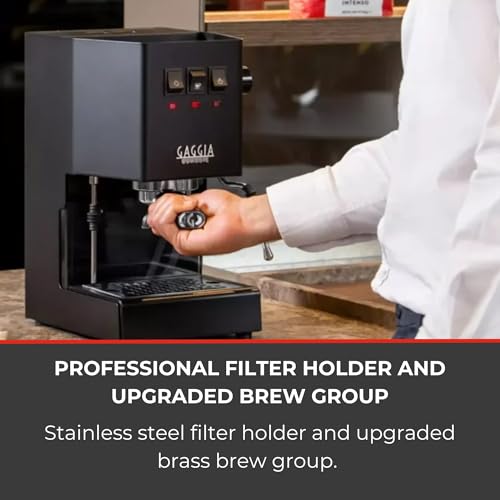
Build quality on the Gaggia Classic Pro is genuinely commercial-grade for a sub-$500 machine. The body uses a single-piece 17-gauge stainless steel construction — the same gauge used in commercial restaurant equipment. The new polished steel group cover won’t peel or flake over time (a common issue with older chrome-plated competitors). The 58mm portafilter is now pure stainless steel rather than chrome-plated brass, eliminating the chipping issues some buyers reported on earlier models. The brass group head and group head dispersion plate (also now stainless steel rather than aluminum) deliver superior thermal stability and temperature direction during extraction.
Setup on the Gaggia Classic Pro is straightforward but has a learning curve compared to plug-and-play consumer machines. The water tank holds 2.1 liters (71 oz) — generous capacity that supports 30-40 shots between refills. The tank is removable from the front for easy filling. The 3-way solenoid valve has a discharge tube that needs to be installed during first setup (the manual’s instructions on this are notoriously incomplete — most users reference YouTube videos for the 30-second setup). Once configured, the machine is ready to brew after 5-10 minutes of warm-up to allow the brass boiler to reach stable operating temperature.
Now for the honest trade-offs. The Gaggia Classic Pro has a significantly longer heat-up time than ThermoJet-equipped competitors. The brass boiler takes 5-10 minutes to reach full operating temperature, compared to the Breville Bambino Plus‘s 3-second ThermoJet heat-up. For busy morning routines, this is the most significant daily inconvenience — most Gaggia owners use a smart plug to turn the machine on automatically 10 minutes before they wake up. Once running, it stays at temperature, but cold-start mornings require planning.
The manual milk steaming has a steeper learning curve than automatic frothers. The professional two-hole commercial steam wand is genuinely excellent — capable of producing café-quality microfoam suitable for latte art — but it requires 30-50 practice sessions to master. The Bambino Plus’s automatic frother delivers latte-art-ready microfoam from day one. For buyers who want milk drinks without learning manual technique, the Bambino Plus is the better choice. For buyers who want to genuinely learn barista skills, the Gaggia’s manual wand is actually preferable.
The fixed brew temperature is the most legitimate enthusiast complaint. The stock Gaggia Classic Pro uses a thermostat rather than PID temperature control, meaning brew temperature oscillates within a few degrees during extraction. This is fine for medium and dark roasts but limits performance with very light third-wave specialty roasts that prefer precise temperature control. The fix is straightforward — add a PID modification for $100-150 — but it’s an additional cost that some buyers prefer to avoid. Out of the box, the brass boiler’s improved thermal mass already provides better temperature stability than older aluminum-boiler Classics.
The included plastic tamper is genuinely poor. Gaggia has been shipping the same plastic tamper since the 1970s, and it’s the universally-criticized weakest accessory in the box. Verified Reddit and Home Barista reviewers consistently recommend buying an aftermarket 58mm metal tamper ($20-50) within the first week of ownership. This isn’t a deal-breaker but is a $20-50 invisible additional cost.
The drip tray is small and fills quickly during heavy use. Cleaning the steam wand requires manual wiping after every milk-frothing session. The pressurized basket included for E.S.E. pods is acceptable for occasional use but most enthusiasts immediately switch to the commercial non-pressurized baskets and pair the machine with a quality burr grinder.
Gaggia Classic Pro vs Breville Bambino Plus vs De’Longhi Stilosa — Comparison
| Feature | Gaggia Classic Pro | Breville Bambino Plus | De’Longhi Stilosa EC260 |
|---|---|---|---|
| Price | $449-499 | $399-499 | $99-149 |
| Made In | Italy | Australia (designed) | Italy |
| Portafilter Size | 58mm commercial | 54mm consumer | Standard consumer |
| Boiler Material | Lead-free brass | ThermoJet (stainless coil) | Stainless steel |
| Heat-Up Time | 5-10 minutes | 3 seconds | 40-60 seconds |
| Extraction Pressure | True 9-bar OPV | 9-bar with pre-infusion | 15-bar pump (consumer) |
| Temperature Control | Thermostat (PID upgrade $100-150) | PID built-in | Thermostat |
| Milk Frothing | Manual two-hole pro wand | Automatic with sensor | Manual single-hole wand |
| Water Tank | 2.1 L (71 oz) | 1.9 L (64 oz) | 1 L (33.8 oz) |
| Body Material | 17-gauge stainless steel | Brushed stainless steel | Plastic + stainless accents |
| Mod Ecosystem | Largest of any home machine | Limited (54mm only) | Minimal |
| Expected Lifespan | 15-20 years | 5-8 years | 3-5 years |
| Warranty | 2 years | 2 years | 1 year |
| Best For | Enthusiasts, long-term, mods | Daily convenience, latte drinkers | Beginners, budget testing |
The Gaggia Classic Pro wins the enthusiast category on commercial-grade components and long-term value per dollar — no other espresso machine under $500 delivers 58mm commercial portafilter ecosystem, brass boiler thermal stability, and 15-20 year build quality. The trade-off versus the Breville Bambino Plus is daily convenience features (heat-up speed, automatic milk frothing) in exchange for commercial-grade build quality and skill development potential.
For buyers who want maximum daily convenience and don’t care about long-term modification potential, the Bambino Plus is the practical choice. For buyers testing whether home espresso fits their lifestyle on a tight budget, the De’Longhi Stilosa EC260 is the entry point. For dedicated enthusiasts who want one espresso machine for 15-20 years of evolving home barista skills, the Gaggia Classic Pro is the only choice in this price range.
Who Should Buy the Gaggia Classic Pro?
- Dedicated home espresso enthusiasts who want commercial-grade components at an entry-level price
- Buyers who plan to learn proper barista skills and want manual control over every variable
- Long-term thinkers who want one espresso machine for 15-20 years rather than upgrading every 5
- Future modders interested in PID controllers, bottomless portafilters, and 58mm precision baskets
- Anyone who values the 58mm commercial portafilter ecosystem and aftermarket community
- Specialty coffee drinkers who want stable thermal performance from the new brass boiler
- Latte art enthusiasts who want the professional two-hole steam wand for serious microfoam practice
- Buyers replacing a 10+ year old espresso machine and wanting another permanent kitchen investment
- Italian-design enthusiasts who appreciate the heritage of Achille Gaggia’s original espresso invention
- Couples or households where one person is a serious home barista and others are casual drinkers
Skip the Gaggia Classic Pro if you want premium 3-second heat-up speed (the Breville Bambino Plus with ThermoJet is the convenience pick), you don’t want to learn manual milk steaming and prefer automatic frothing (Bambino Plus or De’Longhi La Specialista are alternatives), you’re a casual coffee drinker who makes 1-2 drinks per day and doesn’t need long-term durability (the De’Longhi Stilosa at one-third the price is fine), you have no interest in eventual modifications and want a fully-featured machine out of the box (PID upgrade and tamper replacement are practical eventualities for Gaggia owners), or your budget is under $300 and you can accept compromises on commercial-grade components.
Gaggia Classic Pro Alternatives to Consider
If the Gaggia Classic Pro doesn’t perfectly match your needs, here are the main alternatives across the espresso machine spectrum:
- Best for convenience: The Breville Bambino Plus at $399-499 delivers ThermoJet 3-second heat-up, automatic milk frothing, and PID temperature control — the right choice for buyers prioritizing daily-use convenience over long-term modification potential.
- Best for budget: The De’Longhi Stilosa EC260 at $99-149 delivers genuine 15-bar pump espresso with stainless steel boiler at a fraction of premium prices — the right choice for first-time buyers testing the hobby before committing more money.
- Best with built-in grinder: The Breville Barista Express at $599-699 combines an espresso machine and conical burr grinder in one unit — convenient for buyers who haven’t bought a separate grinder yet (essential for Gaggia owners using non-pressurized baskets).
- Best step-up: The Profitec Go at $899-999 or Rancilio Silvia Pro X at $1,799 are the natural prosumer upgrades from the Gaggia Classic — single-boiler with PID built-in, premium build, and higher steam capacity for buyers ready to invest more.
- Best heritage alternative: The Rancilio Silvia (E or M model) at $749-849 is the closest direct competitor to the Gaggia Classic — also 58mm commercial portafilter, also Italian, also a beloved enthusiast machine with a similar mod ecosystem but slightly higher price.
Gaggia Classic Pro Review — Frequently Asked Questions
Is the Gaggia Classic Pro worth $449-499 over the cheaper Stilosa?
For dedicated enthusiasts and long-term users — absolutely. The Gaggia delivers commercial-grade 58mm portafilter, brass boiler thermal stability, true 9-bar OPV, professional steam wand, 17-gauge stainless steel construction, and 15-20 year longevity that the De’Longhi Stilosa cannot match. For casual coffee drinkers making 1-2 daily drinks, the Stilosa is fine. For anyone serious about home barista skills, the Gaggia justifies its price.
How long does the Gaggia Classic Pro take to heat up?
The Gaggia Classic Pro takes 5-10 minutes to reach full operating temperature from a cold start. The new brass boiler is faster than the older aluminum versions but significantly slower than the Breville Bambino Plus‘s 3-second ThermoJet system. Most Gaggia owners use a smart plug to turn the machine on automatically before they wake up to eliminate the morning wait.
What’s the difference between the Gaggia Classic Pro and the Gaggia Classic Evo Pro?
“Classic Pro” and “Classic Evo Pro” are sometimes used interchangeably, but the current 2024-2025 model on Amazon is officially the Gaggia Classic Pro E24 (also called Classic Evo Pro in some markets). Key features: lead-free brass boiler (upgraded from aluminum), all-stainless steel 58mm portafilter (upgraded from chrome-plated brass), polished steel group cover, redesigned internal foundation for quieter pump operation, and anti-scale boiler coating. All RI9380/XX models (49, 46, 47, 50) are the same machine in different colors.
Can I make café-quality lattes with the Gaggia Classic Pro?
Yes — the professional two-hole commercial steam wand is genuinely excellent and capable of producing café-quality microfoam suitable for latte art. However, it requires 30-50 practice sessions to master manual milk steaming technique. For automatic latte-art-ready microfoam without practice, the Bambino Plus is the better choice. For buyers who want to learn proper barista skills, the Gaggia’s manual wand is preferable.
Why is the Gaggia Classic Pro so popular on Reddit and Coffee Geek?
Three reasons: (1) it’s the only sub-$500 machine with commercial-grade components and 58mm portafilter ecosystem, (2) it has the largest aftermarket modification community of any home espresso machine ever made — PID kits, bottomless portafilters, IMS precision baskets, steam wand upgrades — meaning the machine can be progressively improved as skills grow, and (3) it’s built to last 15-20 years, making it a true long-term investment rather than a 3-5 year disposable kitchen appliance.
Do I need a separate grinder for the Gaggia Classic Pro?
For best results, yes — a quality burr grinder is essential to unlock the Gaggia’s full potential. The included pressurized basket works with pre-ground supermarket espresso, but the commercial single and double-shot baskets require freshly ground beans from a quality grinder. Budget pairings include the Baratza Encore ESP ($200), DF54 ($300), or Eureka Mignon Specialita ($450). The grinder is often called “more important than the machine” by serious enthusiasts.
What modifications should I consider for the Gaggia Classic Pro?
Common upgrades in order of value: (1) replace the plastic tamper with a 58mm metal tamper ($20-50), (2) add a PID temperature controller for precise brew temperature control ($100-150), (3) buy a bottomless portafilter to diagnose extraction issues ($50-100), (4) upgrade to IMS or VST precision baskets ($30-50), (5) add a Silvia or commercial steam wand for better milk texturing ($30-80). Total mod cost ($250-400) still keeps the system under $1,000 total — competitive with $1,500+ stock prosumer machines.
How loud is the Gaggia Classic Pro?
The vibratory pump produces moderate noise during the 25-30 second extraction. The 2024-2025 redesigned internal foundation significantly reduces vibration noise compared to older Classic models. Steam operation is comparable to other manual frothers. Overall noise level is acceptable for normal kitchen use but loud enough to be noticeable in quiet morning environments.
Is the Gaggia Classic Pro a single boiler or dual boiler machine?
Single boiler with thermostat control. This means you need to wait briefly between switching between brewing temperature (lower) and steaming temperature (higher) — typically 30-60 seconds. The thermostat is a switchable two-temperature design rather than a continuously variable PID, which is why many enthusiasts add a PID modification. For dual-boiler simultaneous brew/steam, you’re looking at prosumer machines $1,200+.
Gaggia Classic Pro Review — Final Verdict
The Gaggia Classic Pro is the best espresso machine under $500 for enthusiasts who want commercial-grade components, the 58mm professional portafilter ecosystem, and 15-20 year build quality in a mod-friendly platform that scales with their skills. At $449-499, it is the only espresso machine in this price range built with genuine commercial-grade components — true 9-bar OPV extraction meeting Specialty Coffee Association standards, lead-free brass boiler with superior thermal stability over aluminum, 58mm commercial stainless steel portafilter and brass group head, single-piece 17-gauge stainless steel body construction, professional two-hole commercial steam wand for café-quality microfoam, 3-way solenoid valve for dry coffee pucks, 2.1-liter water tank, and the largest aftermarket modification community of any home espresso machine ever produced.
The Gaggia Classic Pro’s trade-offs are clear and aimed at serious enthusiasts rather than casual users: 5-10 minute heat-up time is dramatically slower than ThermoJet competitors, manual milk steaming requires 30-50 practice sessions to master, fixed brew temperature without PID is improvable with a $100-150 modification, the included plastic tamper is universally criticized and needs aftermarket replacement, and the machine demands a quality burr grinder pairing for best results. But for the dedicated home espresso enthusiast, the long-term home barista, the future modder, or anyone who values the 58mm commercial ecosystem and 15-20 year build quality, the Gaggia Classic Pro delivers more long-term value than any other machine in this price range — backed by Gaggia’s Italian heritage dating to 1938 when Achille Gaggia literally invented modern espresso in Milan, a 2-year manufacturer warranty, and consistent recommendations from r/espresso, Home Barista, and Coffee Geek as the entry-level prosumer espresso machine to own in 2026.
For the full cluster including overall best, budget, compact, and grinder-included alternatives, see our best espresso machine under $500 roundup.
SoftPickr Rating: 9.3/10
Additional information
Specification: Gaggia Classic Pro Espresso Machine — Best Enthusiast Espresso Machine Under $500
|
There are no reviews yet.