


Garrett ACE 300 Metal Detector — Waterproof Coil, 8 Programs
There is a wide gulf between a metal detector and a toy that beeps. The toys are the ninety dollar machines that alert on every bottle cap, nail and foil wrapper in a field, which is why most people who buy one use it twice and put it in a shed. What separates a real detector is discrimination: the ability to tell iron from silver and simply not tell you about the iron. The machine that turns metal detecting from a novelty into a hobby, and the cheapest one that genuinely does.

$269.99
Description
Garrett ACE 300 Metal Detector Review
There is a wide gulf between a metal detector and a toy that beeps. The toys are the ninety dollar machines that alert on every bottle cap, nail and foil wrapper in a field, which is why most people who buy one use it twice and put it in a shed. What separates a real detector is discrimination: the ability to tell iron from silver and simply not tell you about the iron.
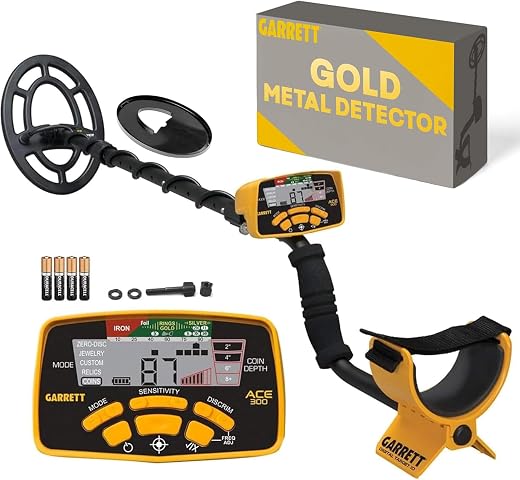
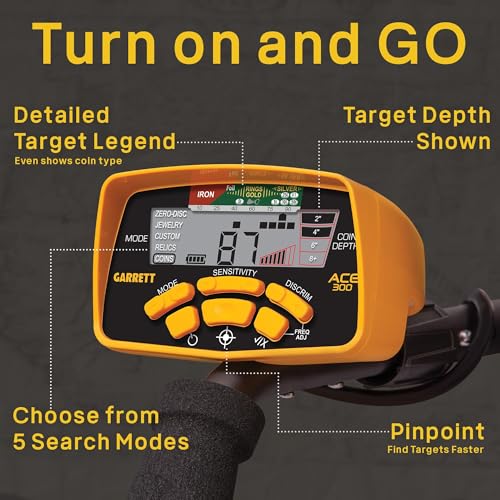
The Garrett ACE 300 is the machine most experienced detectorists recommend to beginners, and has been for years. It is made in the United States, costs around two hundred and seventy dollars, and gives you notch discrimination, a digital target ID scale, five search modes, iron audio and a submersible searchcoil. It holds 4.6 stars across 3,327 ratings.
Quick verdict: the garrett ace 300 metal detector scores 8.6/10 in this SoftPickr review. the machine that turns metal detecting from a novelty into a hobby, and the cheapest one that genuinely does.
Table of Contents
- Key Specifications
- Discrimination Is the Whole Reason to Spend This Much
- Iron Audio and the Trap It Solves
- Waterproof Coil, Splash Resistant Control Box
- Twenty-Five Hours and Fifty-One Inches
- Limitations and Compromises
- Cleaning and Field Care
- Who Should Buy It?
- SoftPickr Verdict
- Frequently Asked Questions
- Related Reviews

Key Specifications
| Feature | Specification |
|---|---|
| Detector type | VLF, motion, single frequency |
| Search modes | 5 modes, 8 programs |
| Display | LCD with digital target ID |
| Operating frequency | Not stated in the listing |
| Searchcoil size | Not stated in the listing |
| Coil waterproofing | Submersible searchcoil |
| Housing rating | IP54, splash resistant only |
| Battery life | 25 hours |
| Extended length | 51 inches |
| Weight class | Lightweight, adjustable stem |
| Country of manufacture | United States |
| Amazon rating | 4.6 out of 5 from 3,327 ratings |
Discrimination Is the Whole Reason to Spend This Much
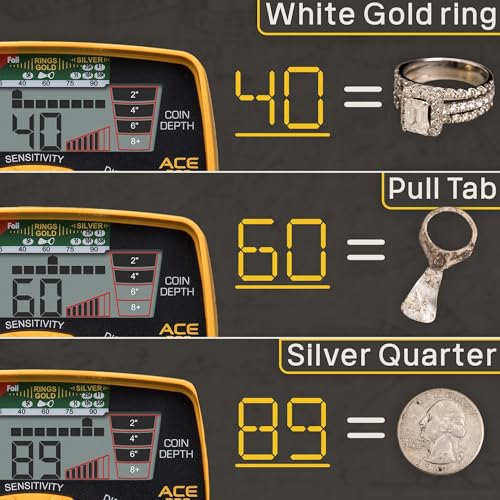
A cheap detector tells you that metal is present. The ACE 300 tells you roughly what kind, by measuring how a target responds to the transmitted field and placing it on a conductivity scale from iron at one end to silver at the other. You then notch out the segments you do not want, and the machine simply stays silent over them.
The practical effect is enormous. A typical park or field contains hundreds of iron nails and bottle caps for every coin, and a detector without discrimination makes you dig all of them. Notching out iron converts an afternoon of digging rubbish into an afternoon of digging targets worth investigating, which is the difference between a hobby and a chore.
Iron Audio and the Trap It Solves
Discrimination has a well known failure mode: a large iron object such as a horseshoe or a nail can produce a signal that mimics a good high-conductivity target, and a machine that has been told to ignore iron will happily report it as silver. Detectorists call these iron falses, and they are the single biggest source of wasted digging at this level.
Iron audio lets you hear the iron you have discriminated out, as a distinct low grunt underneath the good tone. You keep the benefit of a filtered signal while retaining the information needed to recognise a false. It is a feature normally found on more expensive machines, and its presence at this price is a large part of why the ACE 300 has the reputation it does.
Waterproof Coil, Splash Resistant Control Box
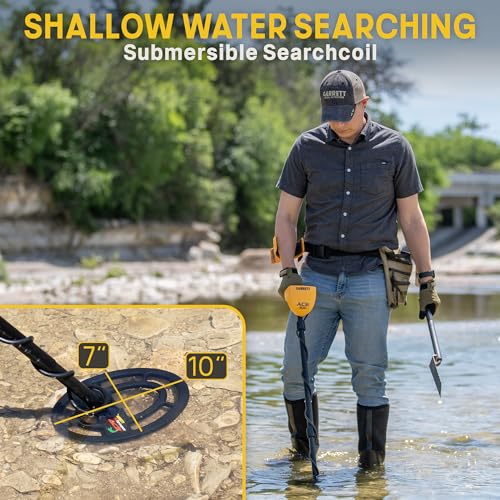
The searchcoil is fully submersible and the control housing is rated IP54, which is protection against splashing water rather than immersion. This is not a contradiction, it is the standard architecture: the coil is sealed because it works at the ground and often in wet grass or shallow water, while the electronics and battery sit at the top of the stem in a case that is expected to stay dry.
In practice you can detect in wet fields, in the rain, and in the shallows at the edge of a lake or beach with the coil under water. What you cannot do is wade in past your waist or drop the machine in a stream. Anyone planning genuine underwater detecting needs a fully waterproof machine, which is a substantially more expensive category.
Twenty-Five Hours and Fifty-One Inches
Battery life is 25 hours, which in a hobby measured in three or four hour outings means a season on one set of batteries. This matters more than it sounds: detectors that eat batteries get left at home, and a machine that is simply always ready removes a small excuse that otherwise accumulates.
The stem extends to 51 inches and adjusts down, which covers a wide range of user heights and makes the machine genuinely usable by a child alongside an adult. It is light enough to swing for hours without shoulder fatigue, which is not true of every detector at this price and is the specification that decides how long an outing lasts.
Limitations and Compromises
The listing publishes neither the operating frequency nor the searchcoil size, and those are the two numbers that define what a detector is good at. Frequency determines sensitivity to small gold versus large silver; coil size trades depth against separation in trashy ground. Nineteen specification fields and neither of the two figures a detectorist would ask for first.
Single frequency VLF is the right technology at this price and it has a real limit: it struggles in highly mineralised soil and on salt water beaches, where the ground itself produces a signal. Ground balance on the ACE 300 is preset rather than adjustable, so difficult ground is difficult and there is no way to tune around it.
No warranty term appears in the listing at all, and the UPC field contains three different numbers. Garrett is a serious manufacturer with a real service operation behind it, but a buyer reading only this page has no way to establish what cover comes with a two hundred and seventy dollar machine.
Cleaning and Field Care
The coil gets dragged through wet grass, sand and mud and should be rinsed with fresh water after every outing, especially after a beach. Salt is corrosive to the coil cable connector and to the stem hardware, and it is the main reason detectors fail early. Dry the connector before storing and check that the cable is still wrapped snugly around the stem — a loose cable slaps the coil and generates phantom signals.
Store the machine with the batteries removed if it is going to sit for a season, because a leaking alkaline cell will destroy a control housing that is otherwise good for decades. Keep the coil cover fitted; it is a sacrificial part that costs a few dollars and protects a component that costs a great deal more, and replacing a scuffed cover is far cheaper than replacing a coil.
Who Should Buy It?
- You want to actually take up detecting rather than try it once and abandon it.
- You need real discrimination so you are digging targets rather than bottle caps.
- You detect parks, fields, footpaths and the dry sand of beaches.
- You want a machine light enough to swing for a full afternoon.
- You value a US manufacturer with a genuine service and spares operation behind the product.
Look elsewhere if you intend to detect in salt water or wade into the surf, because a splash resistant control box and a preset ground balance are both the wrong tools for that job and a fully waterproof pulse induction machine is what the task needs. Look elsewhere too if you specifically hunt small gold in mineralised ground, where a higher frequency machine with adjustable ground balance will find things the ACE 300 cannot hear at all.
SoftPickr Verdict
The garrett ace 300 metal detector earns 8.6/10. This earns Editor Choice because it is the point on the price curve where a detector stops being a novelty. Notch discrimination, a digital target ID scale and iron audio together mean you can walk a field and dig the things worth digging, and no cheaper machine gives you all three. Twenty-five hour battery life and a 51 inch adjustable stem make it a machine people actually take out.
The single compromise is documentation rather than hardware: Garrett publishes neither the operating frequency nor the coil size, which are the first two questions any detectorist asks, and states no warranty term. The machine is excellent and very well evidenced at 4.6 stars across 3,327 ratings. The product page simply does not do it justice.
Price and availability change frequently on Amazon, and prices shown here may be out of date — check the current listing before ordering.
garrett ace 300 metal detector — Frequently Asked Questions
Is the Garrett ACE 300 metal detector good for a complete beginner?
It is the machine most experienced detectorists point beginners towards. The preset search modes mean you can switch it on and hunt immediately, while notch discrimination, target ID and iron audio give you room to grow for years. It is significantly more capable than the sub-hundred dollar detectors that put most people off the hobby.
Can I use it in water?
The searchcoil is fully submersible, so you can detect in wet grass, rain, and the shallow edge of a lake or beach with the coil under water. The control housing is only IP54 splash resistant, so it must stay dry. Genuine underwater detecting needs a fully waterproof machine, which is a much more expensive class of product.
What frequency does it run at and how big is the coil?
Neither figure appears in this listing, which is a real omission given they are the two specifications that define a detector behaviour. Frequency governs sensitivity to different metals and coil size trades depth against target separation, so if either matters to your hunting ground, confirm them with Garrett before buying.
How deep will it detect a coin?
Depth depends enormously on soil mineralisation, target size and orientation, so no honest single number exists. In ordinary park soil a coin-sized target is comfortably within range at typical hobby depths; in heavily mineralised or salt-affected ground, performance falls off and the preset ground balance gives you no way to compensate.
Ready to buy? You can check the current price of the garrett ace 300 metal detector on Amazon — the listing shows live pricing and current stock, both of which move around more than the specification does. SoftPickr earns a commission on qualifying purchases at no extra cost to you.
Related Reviews
If the garrett ace 300 metal detector is not quite the right fit, these SoftPickr reviews cover the closest alternatives we have tested:
Additional information
Specification: Garrett ACE 300 Metal Detector — Waterproof Coil, 8 Programs
|

There are no reviews yet.