
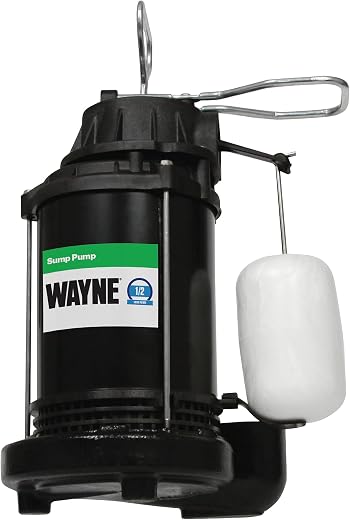

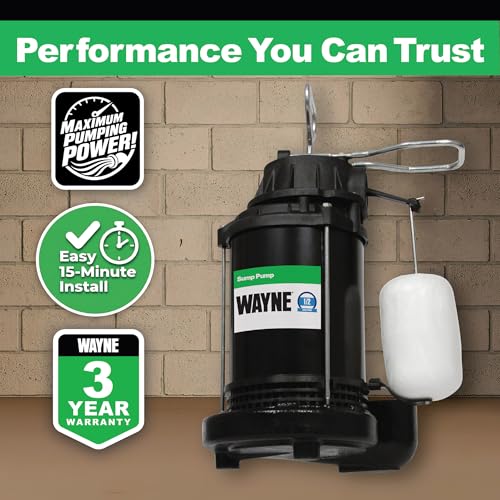
WAYNE CDU800 Sump Pump — 1/2 HP Submersible, 5100 GPH
A sump pump is the only appliance in a house whose failure is measured in tens of thousands of dollars. It sits in a pit doing nothing for months, and then one night in a heavy storm it either runs for six hours or it does not, and the difference is a dry basement or a ruined one. Nothing about it is glamorous and everything about it is consequential. Cast iron, a float switch tested to a million cycles and a three-year warranty, at 4.8 stars, on the appliance least worth economising on.
Original price was: $197.99.$158.78Current price is: $158.78.
 Amazon.com
| Price history for WAYNE CDU800 1/2 HP Submersible Sump Pump – Cast Iron & Stainless Steel, Vertical Float Switch, 5,100 GPH, 3-Year Warranty | |
|---|---|
|
Latest updates:
|
|

Original price was: $197.99.$158.78Current price is: $158.78.
Description
WAYNE CDU800 Sump Pump Review: The One Appliance Where Buying Cheap Is Genuinely Reckless
A sump pump is the only appliance in a house whose failure is measured in tens of thousands of dollars. It sits in a pit doing nothing for months, and then one night in a heavy storm it either runs for six hours or it does not, and the difference is a dry basement or a ruined one. Nothing about it is glamorous and everything about it is consequential.
The WAYNE CDU800 is a 1/2 horsepower cast iron and stainless submersible rated at 5,100 gallons per hour, and at 4.8 stars it carries the highest average rating of anything we have reviewed this year. We looked at why cast iron matters, what the float switch cycle rating really means, and the basin dimension that catches buyers out.
Quick verdict: the WAYNE CDU800 sump pump scores 8.7/10 in this SoftPickr review. Cast iron, a float switch tested to a million cycles and a three-year warranty, at 4.8 stars, on the appliance least worth economising on.
Table of Contents
- Key Specifications
- Why the Cast Iron Body Is the Real Specification
- Five Thousand One Hundred Gallons an Hour, in Context
- The Vertical Float Switch and Its Million-Cycle Rating
- Top Suction and What It Does for Debris
- Limitations and Compromises
- Installation and Maintenance
- Who Should Buy It?
- SoftPickr Verdict
- Frequently Asked Questions
- Related Reviews
Key Specifications
| Feature | Specification |
|---|---|
| Model | WAYNE CDU800 |
| Motor | 1/2 HP |
| Flow rate | 5,100 GPH (85 GPM) |
| Maximum lift | 20 feet |
| Body | Cast iron with stainless steel |
| Switch | Vertical float, tested to 1 million cycles |
| Operation | Fully automatic |
| Power | Corded electric |
| Dimensions | 9 x 9 x 12 in |
| Weight | 12 lb |
| Warranty | 3 years |
| Use | Basement water removal |
Why the Cast Iron Body Is the Real Specification
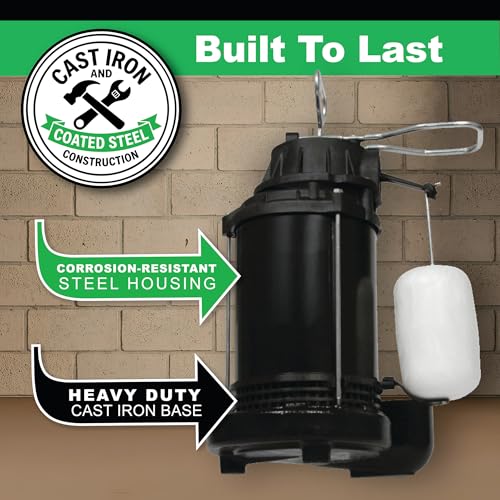
A submersible pump motor is cooled by the water it sits in, and the housing is the path that heat takes to get there. Cast iron conducts heat several times better than the thermoplastic used on cheaper pumps, so the motor runs cooler through a long cycle and the thermal overload trips less often.
That difference is invisible on a dry day and decisive during a storm, when the pump may run near-continuously for hours. Thermoplastic pumps that handle a normal spring will cut out on thermal protection during the one event that actually matters. The cast iron body is also heavy enough at twelve pounds to sit stable in the basin without vibrating against the walls.
Five Thousand One Hundred Gallons an Hour, in Context
Flow ratings on pumps are quoted at zero lift, which never applies in a real installation. The useful figure is flow at the discharge height you actually have. This pump is rated for a maximum lift of twenty feet, and in a typical basement discharging eight to ten feet up and out, it delivers a substantial fraction of its headline number.
For context, a residential sump in heavy rain typically sees a few hundred to a couple of thousand gallons per hour of infiltration. Eighty-five gallons per minute is a large margin over that, and margin is the point: a pump running at forty percent duty during a storm has thermal headroom, while one running continuously at ninety-five percent does not.
The Vertical Float Switch and Its Million-Cycle Rating
Switch failure, not motor failure, is what kills most sump pumps. A tethered float swings on a cable and can hang up on the basin wall, on the discharge pipe or on debris, at which point the pump either never starts or never stops. A vertical float rides on a fixed rod inside a guard and physically cannot swing into anything.
WAYNE states the switch is tested to one million cycles. A typical residential sump cycles perhaps ten to thirty thousand times a year, which puts that rating well beyond the life of the motor. It is the single most reassuring number on the specification sheet, because it addresses the failure mode that actually happens rather than the one people worry about.
Top Suction and What It Does for Debris
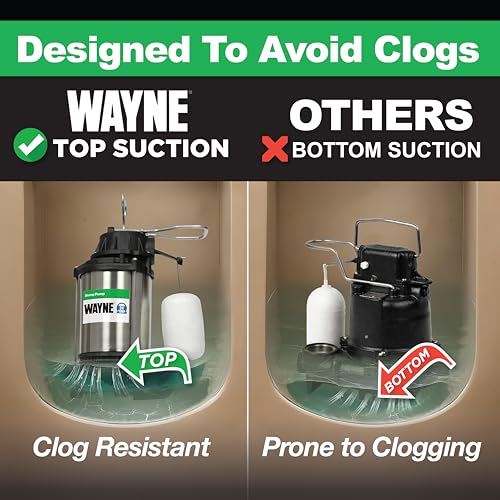
The intake sits above the base of the pump rather than at the very bottom, which is a deliberate design decision with a practical consequence: the pump draws from clearer water above the silt layer that settles in every sump over time. Bottom-intake pumps ingest that silt and it wears the impeller.
The trade is a slightly higher residual water level left in the pit after a cycle, typically an inch or two more than a bottom-intake design. In a sump pit that is entirely irrelevant, because the pit is meant to hold water. In a utility application where you want to pump a floor dry, it matters, and this is a sump pump rather than a utility pump.
Limitations and Compromises
The vertical float mechanism needs clearance to travel, and that means a basin of adequate diameter, typically fourteen inches or more, and adequate depth. In a narrow or shallow pit the float guard can foul the wall and the pump will short-cycle or fail to switch at all. Measure your existing basin before ordering, because this is the single most common reason a perfectly good sump pump gets returned.
It is noticeably louder than a pedestal pump, which is a consequence of the cast iron body transmitting motor and impeller noise into the water and the pit. In a finished basement directly under a bedroom you will hear it cycle. The usual remedies are a check valve with a rubber coupling to break the vibration path and a lid on the sump, and both help substantially.
The specification sheet contains two rows that plainly disagree with the product. The horsepower field reads one on a pump titled and sold as a half horsepower unit, and the voltage field reads 100 volts on a pump built for a 115 to 120 volt North American supply. Both are data entry errors rather than a different pump, but a buyer comparing specification tables across listings should ignore those two rows entirely.
Installation and Maintenance
Fit a check valve in the discharge line if there is not one already, otherwise every cycle drops the column of water in the pipe straight back into the pit and the pump runs again immediately. Use a rubber coupling rather than a rigid connection at the pump, which both simplifies removal and stops vibration travelling up the pipe into the joists.
Test it twice a year by pouring a bucket of water into the pit and watching the full cycle: the float should rise, the pump should start, the water should clear and the pump should stop cleanly. Clear silt from the bottom of the pit annually and check that the float guard is free of debris. A pump that has not been tested since installation is not a pump you can rely on.
Who Should Buy It?
- Anyone replacing a thermoplastic pump that has tripped on thermal overload during a storm
- Homeowners with a finished basement where a failure means restoration rather than a mop
- Properties with a high water table where the pump cycles frequently year-round
- Anyone whose existing pump has a tethered float that has hung up on the basin wall
- Buyers who want a three-year warranty on the appliance least worth economising on
Look elsewhere if your sump basin is narrower than about fourteen inches, because the vertical float needs room to travel and will foul the wall. A pedestal pump is quieter and better suited to a shallow pit under a bedroom, and anyone needing to pump a floor genuinely dry wants a utility pump with a bottom intake rather than a top-suction sump pump.
SoftPickr Verdict
The WAYNE CDU800 sump pump earns 8.7/10. This is the highest-rated product in this round at 4.8 stars, and the specification explains why. Cast iron sinks motor heat into the water so the pump survives a long storm cycle; a vertical float tested to a million cycles removes the failure mode that actually kills sump pumps; top suction keeps silt out of the impeller; and WAYNE backs it for three years.
The compromise is noise and pit size. It is louder than a pedestal pump and it needs a basin wide enough for the float guard to travel freely, which is roughly fourteen inches. Measure first, fit a check valve with a rubber coupling, and this is the pump that will still be working the night you need it to be.
Price and availability change frequently on Amazon, and prices shown here may be out of date — check the current listing before ordering.
WAYNE CDU800 sump pump — Frequently Asked Questions
Will it fit my existing sump basin?
Measure before ordering. The vertical float needs clearance to travel inside its guard, which in practice means a basin of about fourteen inches diameter or more and reasonable depth. In a narrow or shallow pit the guard can foul the wall and the pump will short-cycle or fail to switch. This is the most common reason a good sump pump gets returned.
Is 1/2 horsepower enough, or should I buy 3/4?
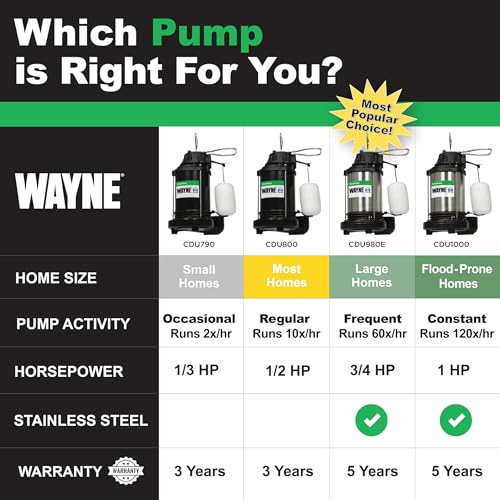
For a typical residential basement discharging eight to ten feet, half a horsepower at 5,100 gallons per hour is a large margin over the few hundred to couple of thousand gallons an hour a sump actually sees in heavy rain. Three-quarter horsepower is worth considering only for a very high water table, a deep basement or a long horizontal discharge run.
How loud is it in a finished basement?
Noticeably louder than a pedestal pump, because the cast iron body transmits motor and impeller noise into the water and pit. You will hear it cycle in a room above. Fitting a lid on the sump and using a rubber coupling at the discharge rather than a rigid connection both cut the transmitted noise substantially, and are worth doing regardless.
What does top suction actually do?
The intake sits above the base of the pump, so it draws from clearer water rather than the silt layer that settles in every sump. That keeps grit out of the impeller and extends its life considerably. The trade is an inch or two more residual water left in the pit after each cycle, which is irrelevant in a sump but matters in a utility application.
Ready to buy? You can check the current price of the WAYNE CDU800 sump pump on Amazon — the listing shows live pricing and current stock, both of which move around more than the specification does. SoftPickr earns a commission on qualifying purchases at no extra cost to you.
Related Reviews
If the WAYNE CDU800 sump pump is not quite the right fit, these SoftPickr reviews cover the closest alternatives we have tested:
Additional information
Specification: WAYNE CDU800 Sump Pump — 1/2 HP Submersible, 5100 GPH
|
Price History
| Price history for WAYNE CDU800 1/2 HP Submersible Sump Pump – Cast Iron & Stainless Steel, Vertical Float Switch, 5,100 GPH, 3-Year Warranty | |
|---|---|
|
Latest updates:
|
|
There are no reviews yet.